

Graduation Planner
Redesigning how students and counselors plan the path to graduation — visualizing progress, surfacing risks, and making the complexity of K-12 graduation requirements navigable.
My Role
- Graduation plan visual redesign
- Setup workflow redesign for counselors
- Requirements organization and information architecture
- User flows, wireframes, and visual design
Company: PowerSchool, Inc.
Role: Principal UX Designer
The Project
PowerSchool SIS was expanding its graduation planning capabilities. I took the opportunity to redesign not just how the plans looked, but how they were set up and how requirements were organized. The goal was to give students and counselors a tool that actually helped them plan, not just display data.
The Challenge
Graduation planning in K-12 is genuinely complex. Requirements vary by state, district, and program. Students have different starting points, transfer credits, elective choices, and timelines. The existing tool surfaced this complexity without helping users navigate it. Students and counselors needed a better way to plan the path to graduation, track progress toward requirements, and identify risks before they became crises.
On the counselor side, setting up graduation plans for an entire district was tedious and error-prone. The configuration workflow was not designed to be intuitive, which meant counselors spent time fighting the tool rather than using it.
Solution
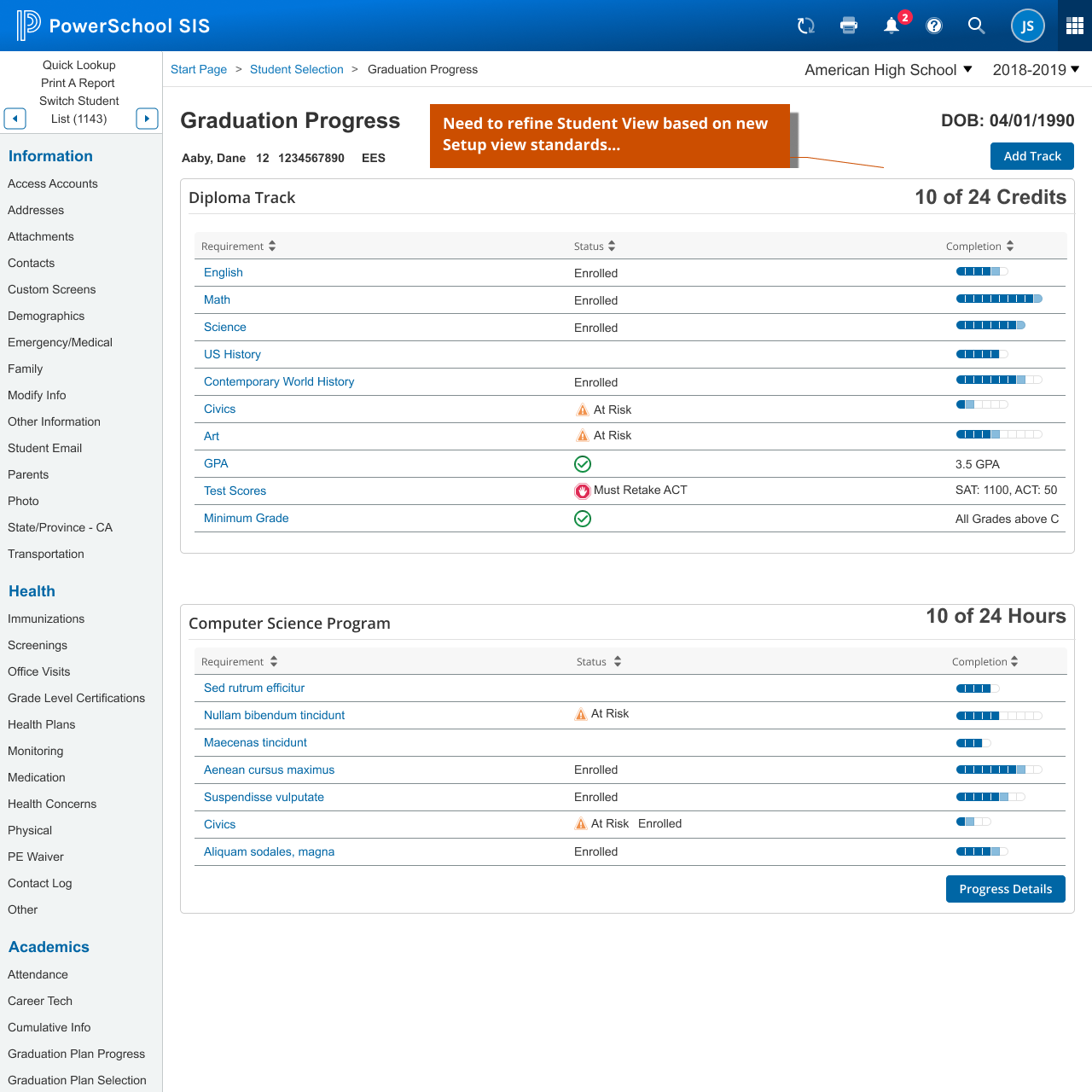
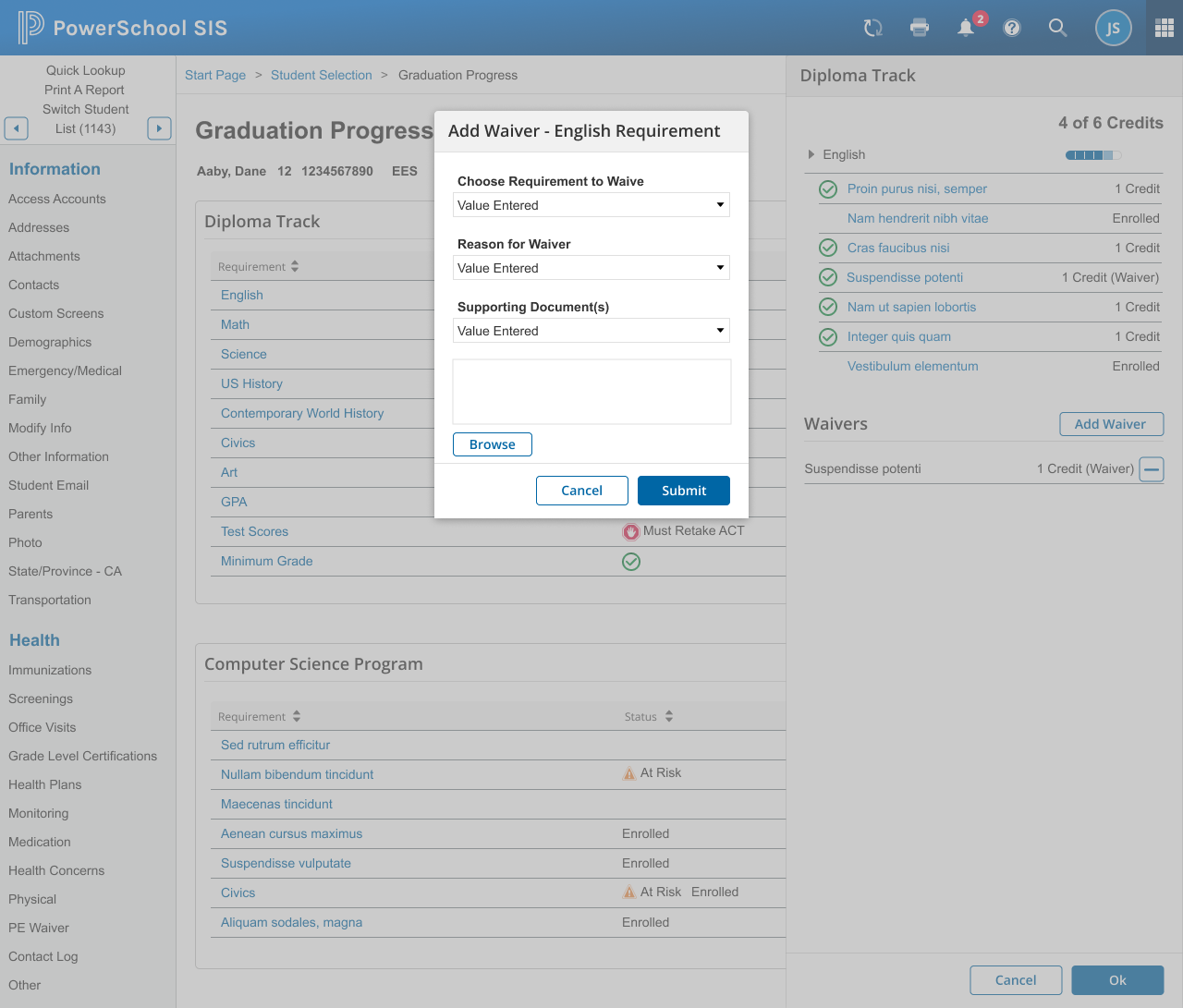
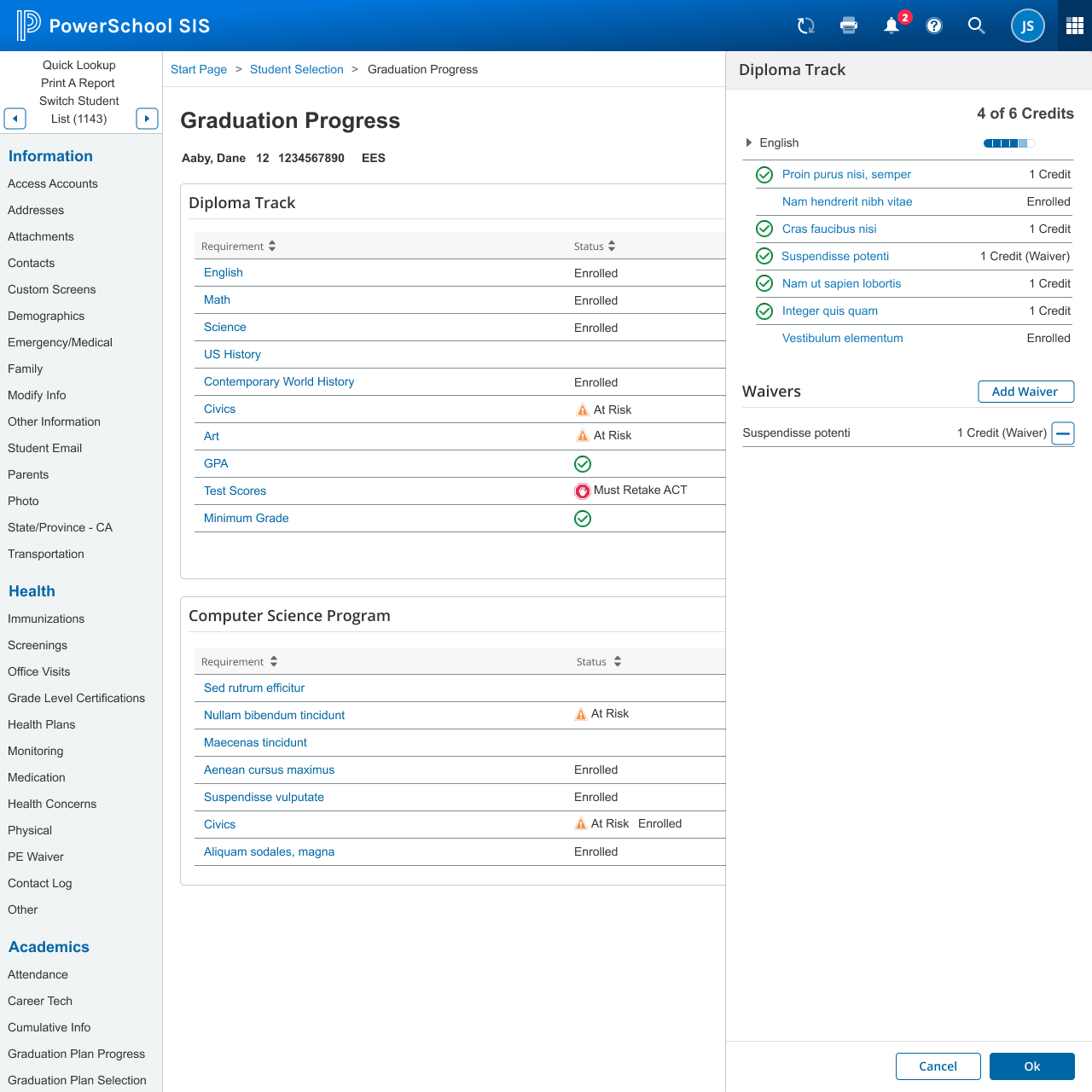
The redesign addressed three distinct areas. The student-facing plan view was redesigned to clearly show completed versus remaining requirements, with visual indicators for at-risk paths so problems could be spotted and acted on early. The counselor setup workflow was simplified and reorganized to make configuration manageable without training. And the underlying organization of graduation requirements was restructured to reflect how requirements actually relate to each other, making the system easier to build plans against and easier for students to understand.
The Results
The redesigned graduation planner gave counselors and students visibility into the path to graduation that the previous tool could not provide. Clear progress visualization and risk indicators meant counselors could be proactive rather than reactive, catching problems with enough time to intervene.
Related Projects
- PowerSchool SIS Re-Architecture — The broader platform this planner is part of